
Protein Molecular Weight Markers

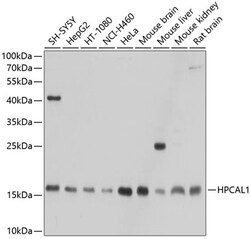
ABclonal Technology HPCAL1 Rabbit pAb

The protein encoded by this gene is a member of neuron-specific calcium-binding proteins family found in the retina and brain. It is highly similar to human hippocalcin protein and nearly identical to the rat and mouse hippocalcin like-1 proteins. It may be involved in the calcium-dependent regulation of rhodopsin phosphorylation and may be of relevance for neuronal signalling in the central nervous system. Several alternatively spliced transcript variants encoding the same protein have been found for this gene.


ABclonal Technology COPE Rabbit pAb
The product of this gene is an epsilon subunit of coatomer protein complex. Coatomer is a cytosolic protein complex that binds to dilysine motifs and reversibly associates with Golgi non-clathrin-coated vesicles. It is required for budding from Golgi membranes, and is essential for the retrograde Golgi-to-ER transport of dilysine-tagged proteins. Coatomer complex consists of at least the alpha, beta, beta, gamma, delta, epsilon and zeta subunits. Alternatively spliced transcript variants encoding different isoforms have been identified.
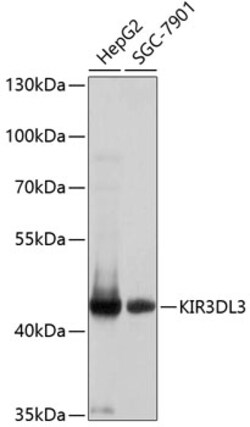
ABclonal Technology KIR3DL3 Rabbit pAb
Killer cell immunoglobulin-like receptors (KIRs) are transmembrane glycoproteins expressed on natural killer cells and some T cells. Encoded by polymorphic and homologous genes clustered at chromosome 19q13.4 within the 1 Mb leukocyte receptor complex (LRC), KIR gene content varies among haplotypes, though framework genes like KIR3DL3, KIR3DP1, KIR3DL4, and KIR3DL2 are always present. KIRs are classified by the number of extracellular domains (2D or 3D) and cytoplasmic tail length. Long-tailed KIRs deliver inhibitory signals via ITIMs, while short-tailed KIRs lack ITIMs and activate signals through TYRO binding protein. Many KIRs recognize subsets of HLA class I molecules, playing key roles in immune regulation. This gene is one of the universally present framework loci.
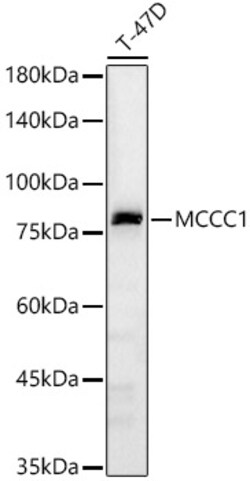
ABclonal Technology MCCC1 Rabbit pAb
This gene encodes the large subunit of 3-methylcrotonyl-CoA carboxylase. This enzyme functions as a heterodimer and catalyzes the carboxylation of 3-methylcrotonyl-CoA to form 3-methylglutaconyl-CoA. Mutations in this gene are associated with 3-Methylcrotonylglycinuria, an autosomal recessive disorder of leucine catabolism.
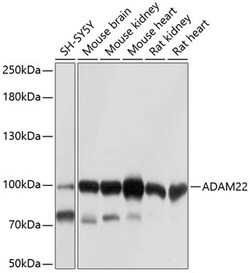
ABclonal Technology ADAM22 Rabbit pAb
This gene encodes a member of the ADAM (a disintegrin and metalloprotease domain) family. Members of this family are membrane-anchored proteins structurally related to snake venom disintegrins, and have been implicated in a variety of biological processes involving cell-cell and cell-matrix interactions, including fertilization, muscle development, and neurogenesis. Unlike other members of the ADAM protein family, the protein encoded by this gene lacks metalloprotease activity since it has no zinc-binding motif. This gene is highly expressed in the brain and may function as an integrin ligand in the brain. In mice, it has been shown to be essential for correct myelination in the peripheral nervous system. Alternative splicing results in several transcript variants.
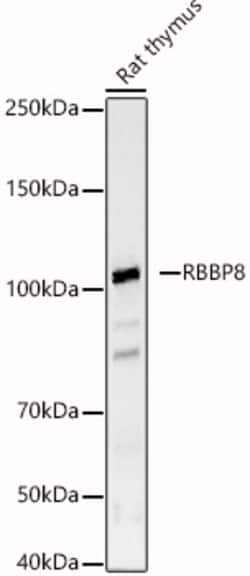
ABclonal Technology RBBP8 Rabbit pAb
The protein encoded by this gene is a ubiquitously expressed nuclear protein. It is found among several proteins that bind directly to retinoblastoma protein, which regulates cell proliferation. This protein complexes with transcriptional co-repressor CTBP. It is also associated with BRCA1 and is thought to modulate the functions of BRCA1 in transcriptional regulation, DNA repair, and/or cell cycle checkpoint control. It is suggested that this gene may itself be a tumor suppressor acting in the same pathway as BRCA1. Three transcript variants encoding two different isoforms have been found for this gene. More transcript variants exist, but their full-length natures have not been determined.
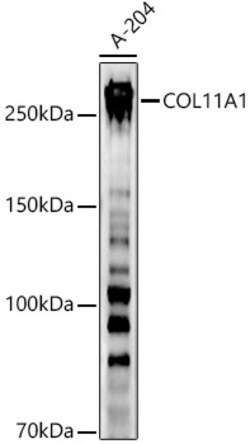
ABclonal Technology COL11A1 Rabbit pAb
This gene encodes one of the two alpha chains of type XI collagen, a minor fibrillar collagen. Type XI collagen is a heterotrimer but the third alpha chain is a post-translationally modified alpha 1 type II chain. Mutations in this gene are associated with type II Stickler syndrome and with Marshall syndrome. A single-nucleotide polymorphism in this gene is also associated with susceptibility to lumbar disc herniation. Multiple transcript variants have been identified for this gene.
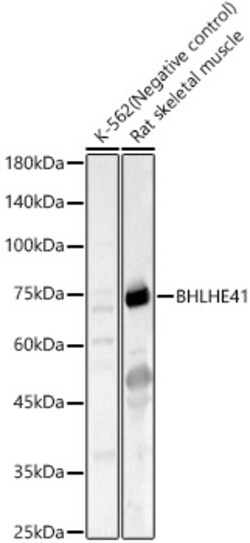
ABclonal Technology BHLHE41 Rabbit pAb
This gene encodes a basic helix-loop-helix protein expressed in various tissues. The encoded protein can interact with ARNTL or compete for E-box binding sites in the promoter of PER1 and repress CLOCK/ARNTLs transactivation of PER1. This gene is believed to be involved in the control of circadian rhythm and cell differentiation. Defects in this gene are associated with the short sleep phenotype.
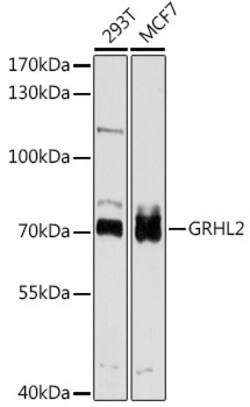
ABclonal Technology GRHL2 Rabbit pAb
The protein encoded by this gene is a transcription factor that can act as a homodimer or as a heterodimer with either GRHL1 or GRHL3. Defects in this gene are a cause of non-syndromic sensorineural deafness autosomal dominant type 28 (DFNA28).
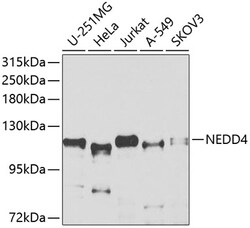
ABclonal Technology NEDD4 Rabbit pAb
This gene is the founding member of the NEDD4 family of HECT ubiquitin ligases that function in the ubiquitin proteasome system of protein degradation. The encoded protein contains an N-terminal calcium and phospholipid binding C2 domain followed by multiple tryptophan-rich WW domains and, a C-terminal HECT ubiquitin ligase catalytic domain. It plays critical role in the regulation of a number of membrane receptors, endocytic machinery components and the tumor suppressor PTEN.
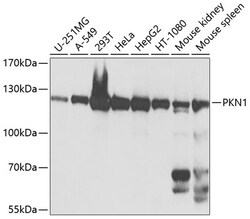
ABclonal Technology PKN1 Rabbit pAb
The protein encoded by this gene belongs to the protein kinase C superfamily. This kinase is activated by Rho family of small G proteins and may mediate the Rho-dependent signaling pathway. This kinase can be activated by phospholipids and by limited proteolysis. The 3-phosphoinositide dependent protein kinase-1 (PDPK1/PDK1) is reported to phosphorylate this kinase, which may mediate insulin signals to the actin cytoskeleton. The proteolytic activation of this kinase by caspase-3 or related proteases during apoptosis suggests its role in signal transduction related to apoptosis. Alternatively spliced transcript variants encoding distinct isoforms have been observed.
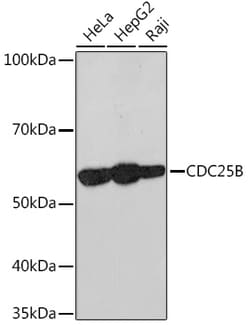
ABCLONAL SCIENCE INC CDC25B Rabbit mAb
CDC25B is a member of the CDC25 family of phosphatases. CDC25B activates the cyclin dependent kinase CDC2 by removing two phosphate groups and it is required for entry into mitosis. CDC25B shuttles between the nucleus and the cytoplasm due to nuclear localization and nuclear export signals. The protein is nuclear in the M and G1 phases of the cell cycle and moves to the cytoplasm during S and G2. CDC25B has oncogenic properties, although its role in tumor formation has not been determined. Multiple transcript variants for this gene exist.
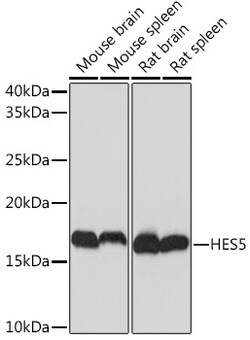
ABCLONAL SCIENCE INC HES5 Rabbit mAb
This gene encodes a member of a family of basic helix-loop-helix transcriptional repressors. The protein product of this gene, which is activated downstream of the Notch pathway, regulates cell differentiation in multiple tissues. Disruptions in the normal expression of this gene have been associated with developmental diseases and cancer.
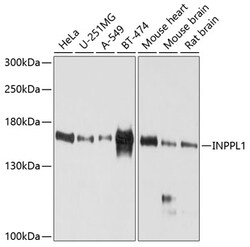
ABclonal Technology INPPL1 Rabbit pAb
The protein encoded by this gene is an SH2-containing 5-inositol phosphatase that is involved in the regulation of insulin function. The encoded protein also plays a role in the regulation of epidermal growth factor receptor turnover and actin remodelling. Additionally, this gene supports metastatic growth in breast cancer and is a valuable biomarker for breast cancer.
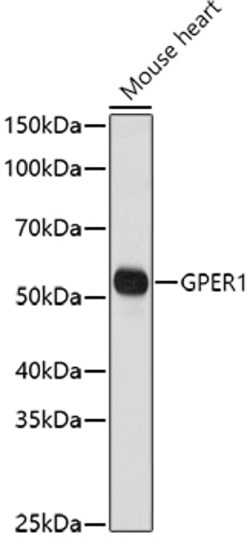
ABclonal Technology GPER1 Rabbit pAb
This gene encodes a multi-pass membrane protein that localizes to the endoplasmic reticulum and a member of the G-protein coupled receptor 1 family. This receptor binds estrogen and activates multiple downstream signaling pathways, leading to stimulation of adenylate cyclase and an increase in cyclic AMP levels, while also promoting intracellular calcium mobilization and synthesis of phosphatidylinositol 3,4,5-trisphosphate in the nucleus. This protein therefore plays a role in the rapid nongenomic signaling events widely observed following stimulation of cells and tissues with estrogen. This receptor has been shown to play a role in diverse biological processes, including bone and nervous system development, metabolism, cognition, male fertility and uterine function.